
THE ANIMATED SERIES
Beginner’s Guide: The Top Five Episodes
The Five-Year Mission Continues
The Animated Series ran on NBC's Saturday morning lineup in 1973 and 1974, with 22 half-hour episodes across two seasons. It picks up where the Original Series left off, finishing the Enterprise's five-year mission, and most of the original cast returned to voice their characters. Because animation costs far less than building alien sets, the writers could finally tell stories on wild planets with strange crews. Look for the three-armed navigator Lt. Arex and the cat-like communications officer M'Ress, both of whom could never have worked in a 1960s live-action budget. Walter Koenig was not asked to voice Chekov for budget reasons, though he did write one episode.
The animation is limited, and the voice acting can be stiff. But the stories were written largely by the people behind the original show, and the best episodes feel like lost Original Series scripts that happen to have a bigger imagination. Star Trek today treats the series as part of the official story, and later shows, including Lower Decks and Strange New Worlds, point back to it with affection.
Crew advisory: Expect charming 1970s limited animation and half-hour stories that move fast. Nothing here requires homework.
1. Yesteryear
When Spock returns from a trip through the Guardian of Forever, he finds that nobody remembers him, and that history has been altered so that he died as a boy on Vulcan. To fix it, he goes back to his own childhood, takes on a different name and sees himself at the age of seven, bullied for being half-human and facing a dangerous desert rite of passage. Written by D.C. Fontana, this is the single most acclaimed episode of the series and a quiet, affecting look at Spock's past that fans have been returning to for fifty years. It is on this list because it shows the animated format at its most ambitious: a grown-up story about identity, loss and growing up, with a gut-punch of an ending involving his pet sehlat.
2. The Counter-Clock Incident
In the series finale, the Enterprise is escorting Commodore Robert April, the first captain of the Enterprise, and his wife to retirement when a mysterious alien ship drags them through a supernova into a universe where time runs backward. As the crew grows younger by the hour, they have to figure out how to reverse the process before they are children, and Commodore April has to take command one last time. It is a goofy premise that becomes a surprisingly thoughtful story about age and experience. It earns its place because it brings the classic Enterprise's history into focus and ends the five-year mission on a warm, optimistic note.
3. More Tribbles, More Troubles
The Original Series gave us the Trouble with Tribbles, and this sequel, once again by David Gerrold, brings back the fast-talking trader Cyrano Jones with a new batch of fluffy trouble and a rival Klingon captain close behind. The Klingons, meanwhile, have bred a tribble-eating predator called a glommer, with less success than they hoped. It is on the list because it is the funniest episode of the series and proof that Star Trek's sense of humor translated perfectly to animation. It also makes a good double feature with the original.
4. The Time Trap
The Enterprise chases a Klingon cruiser into the Delta Triangle, an area of space where ships have been vanishing for centuries, and they end up in a hidden place full of the wrecks of ships from many eras. Kirk and the Klingon commander quickly realize that fighting each other is the quickest way to stay trapped forever. It is a classic setup for Trek's favorite theme, that enemies can become allies when it counts, and it doubles as a gallery of classic aliens: Klingons, Romulans, an Andorian, an Orion and even a Gorn all turn up. It makes the list because it plays to the strengths of animation, with an imaginative setting that the original show could never have afforded.
5. One of Our Planets Is Missing
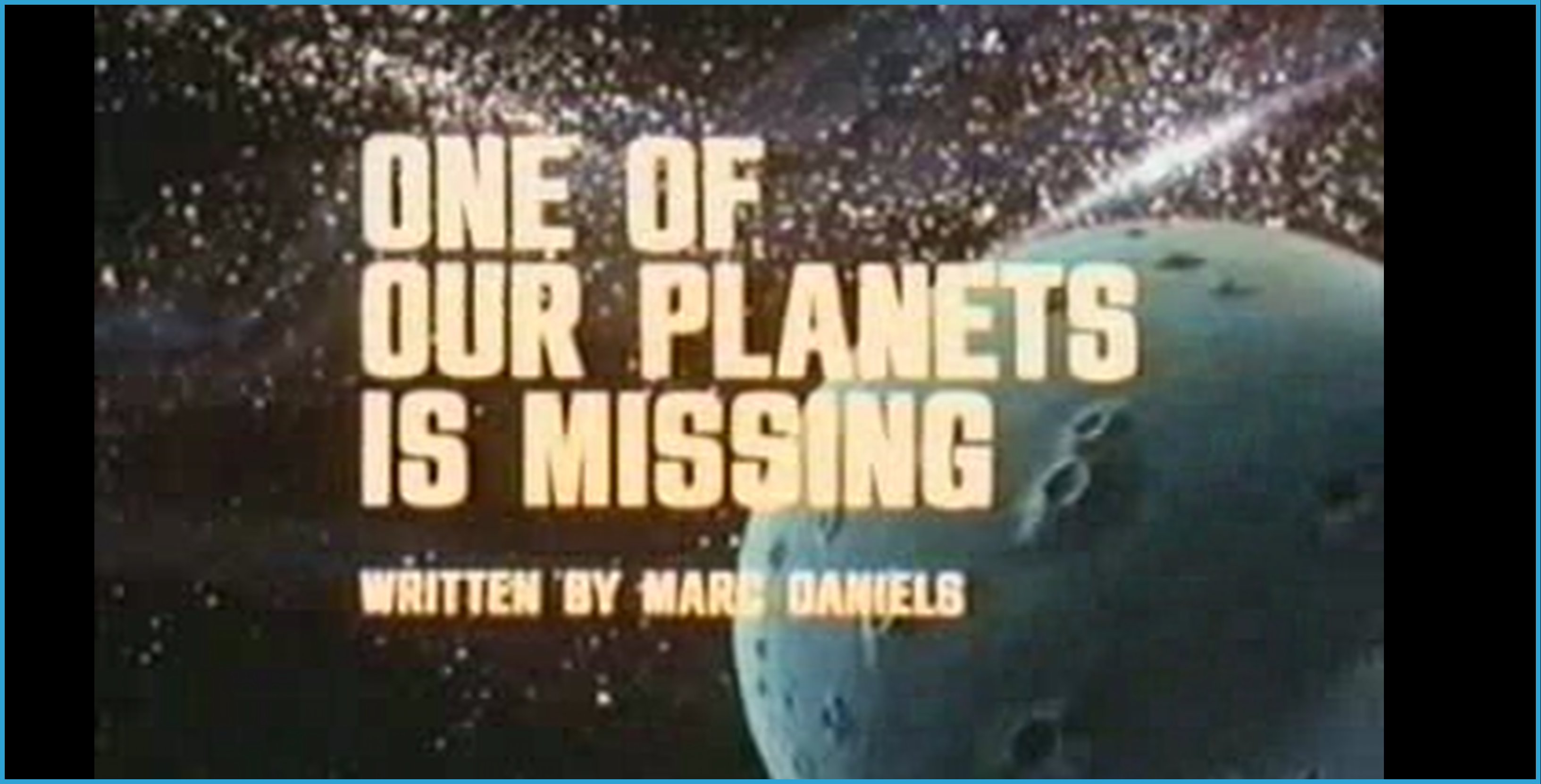
A gigantic cloud creature is drifting through Federation space and consuming entire planets, and a populated colony is next in its path. The Enterprise has to find a way to stop it, and Kirk, who is under heavy pressure, has to decide how far he is willing to go to protect a world. The answer turns out not to be firepower. The story is a pure Star Trek solution to a monster problem: understand the creature rather than simply destroy it. It lands on this list because it is a tight, 24-minute example of what the series does best, and fans have often noted how closely it prefigures the plot of Star Trek: The Motion Picture.
← The Original Series The Next Generation →
More of the beginner’s guide: The Original Series • The Next Generation • Deep Space Nine • Voyager • Enterprise • Discovery • Picard • Lower Decks • Prodigy • Strange New Worlds • Short Treks • Starfleet Academy.
Not sure what order to watch in? Try our chronological watch order or the Star Trek timeline. Want people to talk Trek with? Enlist and join the crew at one of our Star Trek events around Atlanta.
